• About Calwire
  • Contract Services
  • Capabilities
  • Contact Us
 

Services


Wire EDM 
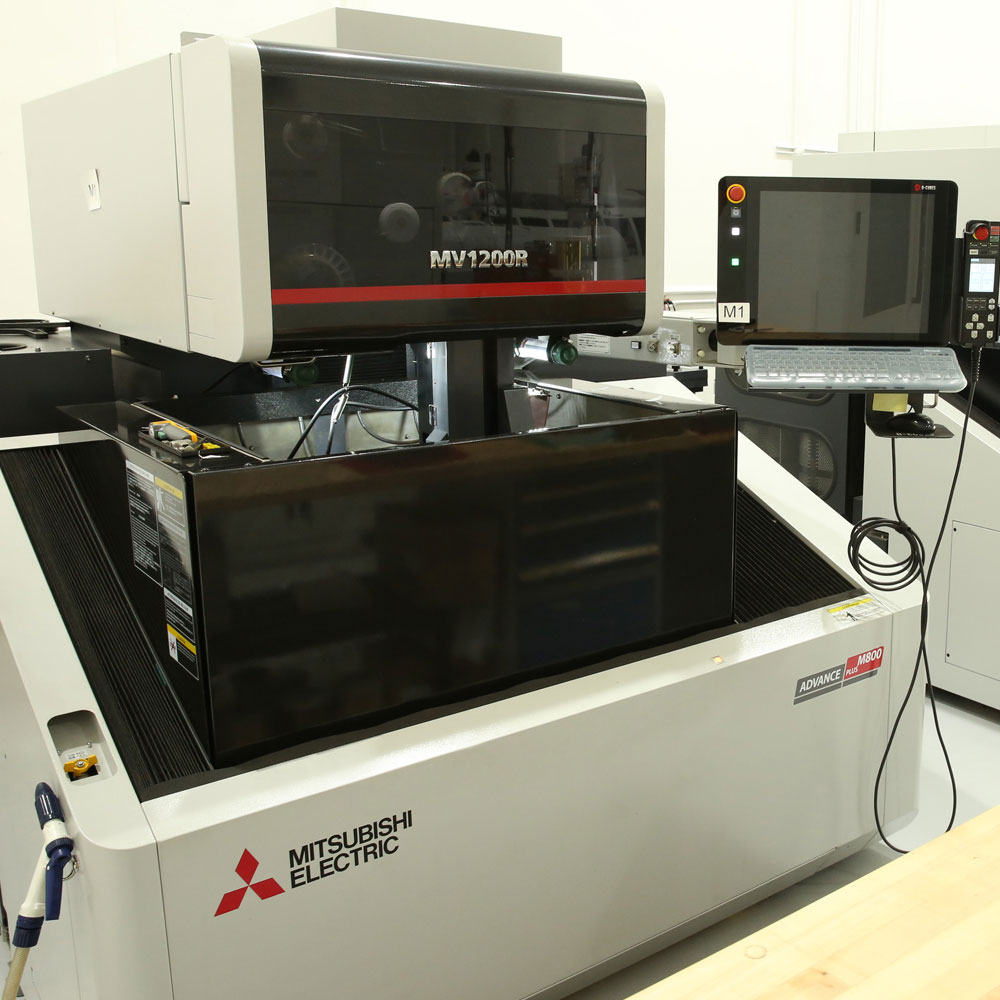
  • Wire EDM also known as wire-cut EDM and wire cutting, a thin single-strand metal wire, usually brass, is fed through the workpiece, submerged in a tank of dielectric fluid, typically deionized water. Wire-cut EDM is typically used to cut plates as thick as 300mm and to make punches, tools, and dies from hard metals that are difficult to machine with other methods.
Sinker EDM
  • Sinker EDM, also called cavity type EDM or volume EDM, consists of an electrode and workpiece submerged in an insulating liquid such as, more typically, oil or, less frequently, other dielectric fluids. The electrode and workpiece are connected to a suitable power supply. The power supply generates an electrical potential between the two parts. As the electrode approaches the workpiece, dielectric breakdown occurs in the fluid, forming a plasma channel, and a small spark jumps.These sparks usually strike one at a time because it is very unlikely that different locations in the inter-electrode space have the identical local electrical characteristics which would enable a spark to occur simultaneously in all such locations. These sparks happen in huge numbers at seemingly random locations between the electrode and the workpiece. As the base metal is eroded, and the spark gap subsequently increased, the electrode is lowered automatically by the machine so that the process can continue uninterrupted. Several hundred thousand sparks occur per second, with the actual duty cycle carefully controlled by the setup parameters
Simultaneous 5 axis High Speed Milling
  • Multiaxis machining is a manufacturing process, where computer numerically controlled tools that move in 4 or more ways are used to manufacture parts out of metal or other materials by milling away excess material. Multiaxis machining offers several improvements over other CNC tools at the cost of increased complexity and price of the machine
    • Amount of work is reduced, if the piece would otherwise have to be turned manually during the machining.
    • Better surface finish can be obtained by moving the tool tangentially about the surface.
    • More complex parts can be manufactured, particularly parts with curved holes.

Turning
  • Turning is the process whereby a single point cutting tool is parallel to the surface. It can be done manually, in a traditional form of lathe, which frequently requires continuous supervision by the operator, or by using a computer controlled and automated lathe which does not. This type of machine tool is referred to as having computer numerical control, better known as CNC. and is commonly used with many other types of machine tool besides the lathe.

Micro Machining
High Tolerances
Excellent Finish Quality


Picture
Picture
Picture
Picture
Web Hosting by FatCow